
Rethinking the “Safe” Color
Black is considered the safest color in professional wardrobes.
But is it actually supporting you?
We have been taught that black is timeless, chic, professional and universally flattering. And I understand the appeal, truly. I love black myself. It has been a loyal favourite in my own wardrobe for years.
Yet, even with my background in color and style, I began to notice something. I do not wear black on days when I want to feel open, warm and approachable, especially when meeting someone for the first time. It can create more distance than I intend.
So rather than removing it from my wardrobe, I learned how to use it with intention. That is what I want to share with you.
Wearing black is my love language. But I always balance it with statement jewelry, color, texture, or a bold lip to keep it approachable and full of life.
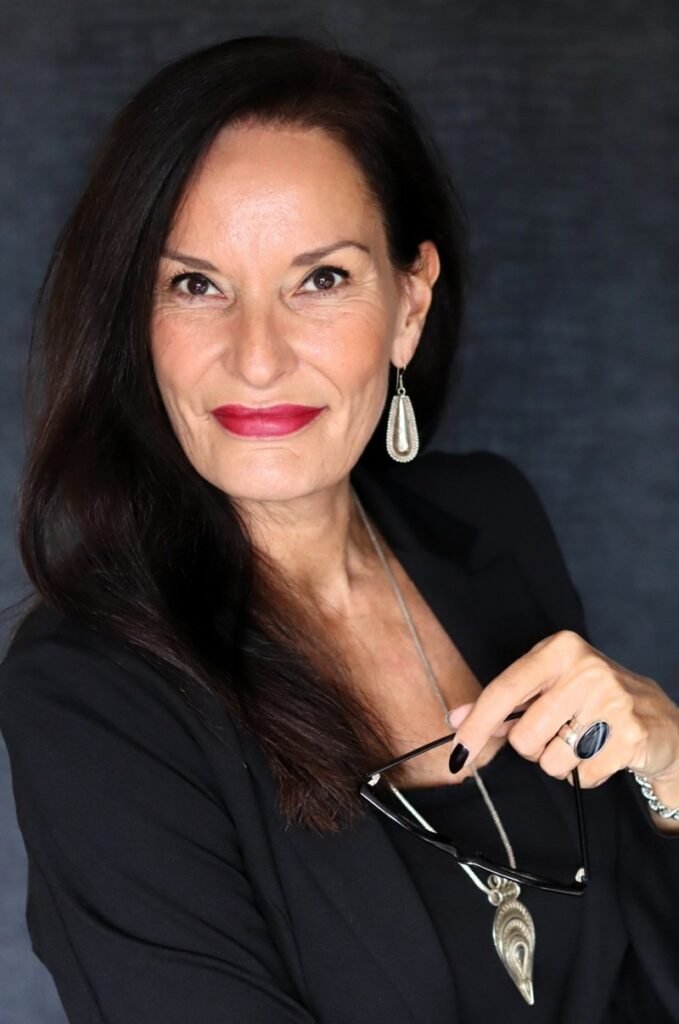
Black: The Myth of Safety
Black has long held a reputation as the “safe” choice. It appears in every wardrobe, every store and every business capsule. It feels reliable, the piece you reach for when you do not know what to wear.
But safe doesn’t always mean supportive.
And it certainly doesn’t always mean flattering.
For many people, black can:
- Add years by draining the face of warmth and vitality
- Make the skin appear dull, tired, or shadowed
- Emphasize lines, dark circles, or redness
- Create emotional distance — especially for naturally soft or warm personalities
So if black doesn’t make everyone shine… why do we cling to it so tightly?
The Psychology Behind Black
Black does carry powerful symbolism, and that’s why we gravitate toward it.
Black communicates:
- Authority
- Professionalism
- Control
- Formality
Think of judges’ robes, corporate suits, uniforms and gala attire. Black has long been associated with seriousness and with dressing the part.
But colors also have an emotional impact. Black can unintentionally signal:
- Closedness instead of approachability
- Severity instead of elegance
- Uniformity instead of individuality
Black is powerful, but it isn’t automatically empowering. Power that diminishes your natural features isn’t real power.
What If Black Isn’t Your Power Color
Just as everyone has a unique personality, everyone has a unique color profile. A palette that enhances their natural skin tone, presence and energy.
For some people, black is simply too harsh. It pulls focus away from them instead of supporting them.
There is good news.
Elegance and gravitas do not depend on black.
I help clients identify their own version of black. The color that offers the same polished, formal effect, but with greater harmony and impact.
Here are examples of deep tones that often work better than black, depending on your coloring:
| If Black Feels Too Harsh… | Your “Black-Equivalent” Might Be |
| Cool & fair skin | Deep navy, midnight blue |
| Warm skin or eyes | Espresso brown, rich camel, warm charcoal |
| Deep dramatic types | Aubergine, forest green, midnight teal |
| Soft or muted types | Soft charcoal, smoky navy, deep rosewood |
When the right deep hue frames your face, magic happens. Your eyes brighten, your skin glows, and you become the focal point, not the outfit.
How to Recognise If Black Loves You, or Drains You
Try this small self-check next time you wear black:
Ask yourself:
- Do I look tired or sharp in black?
- Does my skin look vibrant, or more shadowed and flat?
- Do I feel powerful, or do I “hide” in black?
- What happens when I wear a deep color with warmth or coolness that matches me better?
Stand in natural daylight and hold black under your chin.
Then try a deep navy or warm brown.
Notice what happens to your eyes and skin.
Does your face brighten, or does it flatten?
If the difference surprises you, you’re not alone.
Many women discover during a color analysis that black was never their best friend, just their most familiar companion.
How to Wear Black If You Still Love It
If black feels emotionally tied to your identity, you do not need to say goodbye. Simply wear it with intention.
I personally still enjoy black, but I treat it with care: I pair it with a bold lip, contrasting jewellery, or a touch of vibrant color to keep my face alive and expressive. Those small touches make all the difference.
Here are a few ways to make black work for you, not against you:
⟶ Add a flattering color near the face (scarf, top under a blazer, statement earrings)
⟶ Choose textured black (knit, tweed, linen) instead of flat, hard black
⟶ Add a touch of makeup to balance contrast (a lip, brow, or blush can make a world of difference)
⟶ Mix black with one of your best deep neutrals to keep the elegance but soften the effect Black becomes more wearable when you’re in control of how it interacts with your features.
Final Thought: Power Is Personal
Style isn’t about rules, it’s about resonance.
Black may be everywhere, but that doesn’t make it your power color.
True impact happens when the colors you wear reflect your energy, your presence, and your essence. When that alignment clicks, something shifts:
You don’t just look put-together.
You feel grounded, confident, and unmistakably yourself.
And that is true power.
If you’re curious to discover your personal color palette, including your own “version of black”, I’d love to guide you.
It’s one of my favourite parts of my work: seeing someone recognise themselves — fully — in color.
👉 Book your Personal Color Consultation session and step into a version of elegance that honors who you are, not who you’re “supposed to be” in black.